Group Health fund– Often times in the remote tribal villages, the people do not have the money for transport to a hospital and procurement of medicines. In order to create a security for emergency health needs, health funds in groups are encouraged. This health funds are lend to members when they are in need of money to treat some illness. For further independent handling of their health needs, the members are encouraged to hold monthly health check camps by inviting Doctors with the support from the health fund. For severe illness and accidents referrals are done and subsidized treatment cost is facilitated through linkage with government health promotion schemes.
Health records– The group members are trained to keep records of vaccinations for mothers and infants so as to be regular with the complete immunization.
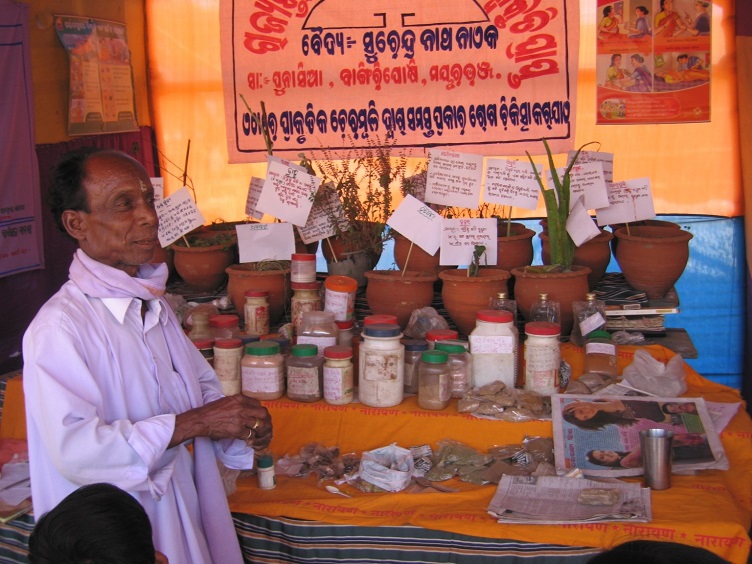
Community managed health care system– To ensure a completely community managed health care system; we have been promoting awareness on traditional herbal medicines and have facilitated linkage with Khabirajs / local traditional medicine practitioners with the people’s groups. Community is educated on herbal medicine preparation and herbal medicinal garden preparation by Khabirajs to make the best use of the available resources and help protect the bio diversity in the area.
Health camps and health awareness camps– Awareness on village sanitation, use of slippers, drinking boiled water, use of mosquito nets is stressed to promote preventive health. Apart from this, special focus is laid for mother and child care, awareness on family planning and gynecological problems. Health check up camps is also arranged periodically according to the health issues in the areas.
Healthy diet through kitchen garden and organic cultivation– For promotion of health, vegetable gardens are promoted in the villages/back yards for encouraging balanced diet in the families. Organic cultivation for better health goes hand in hand with the need for ensuring sustainable agriculture
Education
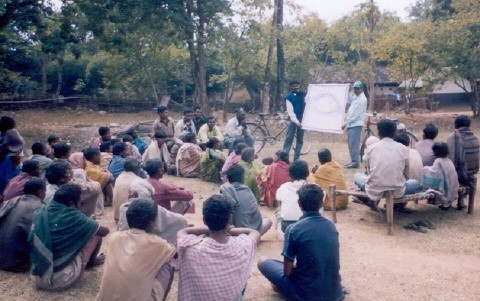
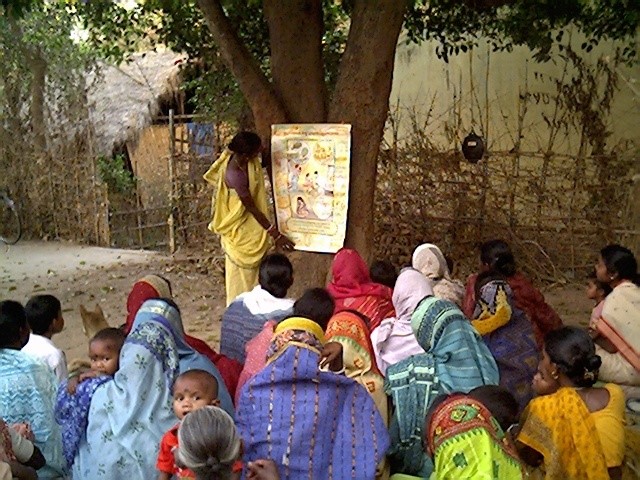
By education in the agriculture based tribal communities, we mean those information and skills that will help the people improve their existing occupation, help better market awareness and security against market fluctuations, optimize use of local resources, develop expression among the community to fight their rights and raise their needs and to help plan a self sustained village in terms of food production.
Farmer’s Diary – A booklet (farmer’s Diary) for each farmer has been introduced in the working villages so that the farmer can keep the individual record of the activities in his/her field. This will help the farmer and also any one visiting the farmer to understand the inputs in the field (activity, time of activity, number of work days, labour force involved and capital as fertilizer, pots , trainings received etc.) In the long run this will help the farmers to develop a cost benefit analysis with the diary entries and revise working methods and crop plan on his/her field.
News Paper reading -As a group activity ‘news paper’ reading was introduced in the groups. It is not a surprise that not a single newspaper reaches the villages where we are working. It is due to multiple factors like- lack of roads, distance from the town, less readership due to illiteracy and lack of interest. Through the news paper reading activity, interesting cuttings of social issues and successes of People’s Organisations, developments in the agriculture sector, new government schemes for rural development are read aloud. Often this acts as a motivation for the members to learn to read and write. Some members have initiated learning the alphabets and Oriya numerical as a part of functional literacy drive.
Awareness programmes on issues – IEC materials have been prepared on the following topics and are discussed in the community meetings to generate awareness and necessary response to the issues. The topics at large-
- Farmer’s rights and seed sovereignty,
- GM crops and danger to food cycle and ecosystem,
- Organic versus chemical cultivation,
- Market risks in cultivation
- Diversified cultivation and food security etc.
- Trainings and exposure visits
Non Formal Education for children– In villages where the nearest primary school are farther than three kilometers and where the tribal children have difficulty in adjusting to the Oriya medium of teaching, alternate classes are held within the village for the beginners with the help of a literate person from within the village who teaches the children in the tribal dialect and also introduces the children to the main curriculum and Oriya language. The children are then introduced to the main schools once they are ready.
Trainings– Trainings are provided to the People’s organizations based on the need and the stage of development of each group. The following are a few trainings for the different groups-
For Women SHG Group
- Record / Account maintenance training for SHG leaders
- Savings practice
- Leadership training (capacity building, group management) for SHG leaders.
- Leadership training for SGSY groups for account management
- Healthy cooking process training for SHG members
- Income generation training for SHG members (Soap making, Poultry rearing, Cooperative society, Milk society, grafting, nursery raising, vermicompost preparation)
- Training on traditional farming for SHG members (Farmer –farmer exchanges)
- Promote herbal health care/ construction of herbal garden
- kitchen garden training
- First-aid treatment
- Village sanitation
- Functionings of NREGA, Right to Information Act etc.

For Farmers groups (Udhyan Vikas Samithies)
- Lay out, Pit digging, Pit filling, Plantation, After care, Inter cropping etc.
- Leadership training for UVS leaders on group management
- Savings for BADI management
- Promotion of traditional farming (seed protection) (Farmer –farmer exchanges)
- Promotion of food diversity (Farmer –farmer exchanges)
- Promotion of Herbal Health Care
- First –aid treatment
- Safe drinking water and water chlorination
- Village sanitation
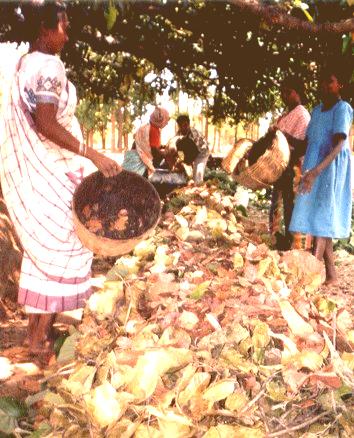
- Preparation EM compost, EM5, FPE, vermin wash and vermicompost.
- Integrated Pest Management
- Integrated Nutrition Management
- Grafting
Exposure visits- Exposure visits are also arranged for the groups to other areas -Inter working areas, other districts , States and Country to facilitate learning through observation and interaction with others.