

‘Dulal’ got its name from the youth groups in Lavanyadeipur village. Rev. Fr. Paul who was serving in the Balasore Diocese volunteered his help to the Tribal people who had been badly affected by floods in the State in 1987. The work brought him to the remote village of Lavanyadeipur in Mayurbhanj District. He noticed that the people had a much laid back approach and the recurring floods and famines had robbed them of all dignity that made them dependent on outer support and Government aids. He sensed the danger the situation of ‘dependency’ can bring. Fr. Paul stayed back at Lavanyadeipur long after the flood relief work was over. He talked to the people and managed to identify a few youth who were willing to fight against un-favourable circumstances and improve their lives. To give this people’s movement a name and to get recognized officially, the group decided to get registered. They suggested that the organization be named ‘Dulal’ which in Ho and Santali meant- Love and Concern. Thus Dulal was registered in 1990 under Societies Registration Act and Foreign Contribution Regulation Act.
Dulal from its inception in 1990 has laid thrust on empowering the grass roots through community building programmes like- formation and strengthening of people’s organizations, thrift and credit development, agro-horticulture development, health and sanitation programmes, education, income generation programmes, soil and water conservation activities and various trainings designed to equip the people with required skill, knowledge and expertise for initiating and accomplishing social development with their own effort and optimally using the resources available and due to them.
We have a core team of dedicated staff with the aptitude for Social work and the grit and determination to work in remote villages without contact with the mainstream for weeks together, all for the final realization of a society that enjoys basic human privileges, the right to voice their opinion and the might to do so and a secure economy and environment.
We are currently working in 711 villages across 3 districts of Odisha, West Bengal and Jharkhand. The villages are spread across 14 blocks out of the total 26 blocks in Mayurbhanj, Odisha, 2 blocks in West Bengal and 1 block in Jharkhand. Till date the organization has reached over 30097 rural households in this region. In West Bengal and Jharkhand, DULAL is working in 45 and 42 villages respectively.
DULAL employs a holistic intervention strategy and stated below are the intervention activities of the organization:
- Promoting People-led Development Process
- Promoting sustainable agricultural practices.
- Waste land development- ODISHA BADI
- Watershed development
- Promoting alternate income generation activities.
- Advocacy and Net working.
- Promoting Health and Education.
- Human resource development.
Our Core Values and Beliefs
- Dignity of every individual and respect to every individual.
- Ability of every individual and community to help themselves.
- Development is a mutual learning process.
- No individual/ community is worthless; all have their rich heritage and traditional knowledge.
- Change is inevitable; people have a right to use discretion on matters of acceptance, rejection or adapting changes and change factors that affect their lives.
- Development of the Nation is incomplete without adequate support to the food producing community, who often times lead the most miserable lives. Development is also not complete and not sustainable until the process is community led, community enforced and community oriented.
Our Guiding Principle
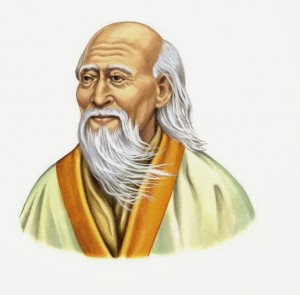
Go to the people. Live with them. Learn from them. Love them. Start with what they know. Build with what they have. But with the best leaders, when the work is done, the task accomplished, the people will say ‘We have done this ourselves’.
— Lao Tzu —
Our Vision
Dulal envisions a society free from poverty, oppression and utilitarian attitude; where the marginalized will be well equipped with organizational capacity, technical know-how and political expression to expand their capabilities and living standards to suit their needs.
Our Mission
Dulal strives to develop the marginalized and weaker sections in society through a process of sensitization and awareness on Human dignity, Human rights and socio–economic issues, so that their innate capabilities and knowledge get expression to help solve their problems through collective endeavour. Dulal’s role is to act as a catalyst for change through strategies of intervention which involves mobilization of resources (people power, natural resources, information and communication) and community activity that encourages economic stability, health, functional literacy and improves and safeguards indigenous knowledge and adaptation of new technology to meet demands of the growing population; not just limited to agriculture but also other primary occupations in the tribal community.
Our Strategy
In 2004, a workshop on Food security and food sovereignty issues and a study on Food Sovereignty conducted in the working blocks of Dulal in association with INAG influenced a lot in understanding the confidence of people in traditional seed varieties (paddy) and also increased the concerns in preventing indigenous knowledge and practices from being lost. From then on there was spruced up effort of staff to observe indigenous methods practices and their impact and influence in the lifestyle in the community. In similar study from other states, a wider picture of food sovereignty issues could be framed and the weaning control of farmers on their farming and farm resources were evident.
Misereor had facilitated for an exchange and learning process for partners in Odisha on ‘People centered approaches in rural development– experiences in farmer-led research and extension in sustainable agriculture in India’ in 2006-2007. The prime aim of the workshop was to facilitate a de-learning, a re-learning and respect for the Adivasi –Chasi community. That means, not just a change in terminologies used in the description of the Adivasi farmer and his way of life but also a change in the perception, attitude and development approaches of the NGOs.
Hence we began to work or rework on the intervention techniques and initiated the ‘Facilitating Farmer Led Initiatives in Mayurbhanj district to facilitate the leadership of the people leading to sustainable agricultural practices through the leadership and knowledge interventions of the people.
Our Areas of Intervention
- Development of proactive and independent people’s groups/ community based organizations/ cooperatives
- Development of tribal economy through thrift, credit and investments in farm and non –farm activities.
- Development of agriculture and environment.
- Development of health care and health protective measures.
- Adaptation of technology for easier –healthier life style.
- Development of awareness on issues related to food sovereignty and food security.
- Revival of traditional/indigenous knowledge and practice of the people.
Awards and achievements
- DULAL was awarded the Best NGO award in 1999 by the then Governor of Odisha.
- DULAL was the 1st NGO in the state to bring the ‘Gem cutting and polishing’ program as a part of IGP
- DULAL was the first NGO to initiate Badi in Odisha in 2003
- DULAL was the NGO selected by NABARD for implementing Badi in 2006 in Odisha